

I gave an athlete an interval run workout.
He was on a hilly campus near his office. No long stretches of flat ground.
So he skipped the intervals and checked down to an easy run.
Then the next week, he was traveling for work. Easy run again.
The following week? He was low on sleep and feeling fatigued. Another easy run.
Six months later — Same pace. Same fitness. Same runner.
I asked him about it. He wasn’t making a bad decision. He was following principles that are true in endurance:
Slow down to get faster.
Build your base first.
Don’t put up a zero.
The hill gave him an out. The philosophy made it feel like the right call.
Until it becomes the problem.
That’s the thing about speed work and beginners.
Easy runs are flexible — any road, any mood, any day of the week.
Speed work, somewhere along the way, becomes fragile.
It apparently needs the right surface, the right day, the right conditions.
A hill is enough to cancel it. Being in a place where you don’t know the roads. Feeling less than 100%.
Life doesn’t even have to try that hard to give you an out.
And every time it does — most beginners take it.
The pattern that builds isn’t just I run easy a lot.
It’s speed work is the thing I’ll do when everything lines up.
Which means it almost never happens.
Enough Of All The Zone 2
I tweeted this out last month. It seemed to resonate.
Every beginner runner gets told the same thing.
“Do more zone 2. Build your base. Slow down to get faster.”
And eventually that’s true.
But if you’re running 10 to 15 miles a week and doing all of it easy, zone 2 isn’t your problem.
You’re not running enough for it to matter that much.
The lowest hanging fruit for most beginners isn’t aerobic fitness.
It’s movement efficiency.
Half the reason you’re slow is sloppy mechanics.
And more slow running just reinforces the sloppiness.
Speed work fixes this.
Intentional, structured fast running that forces your body to coordinate better and run like a runner.
The 80/20 rule is true.
But it was built for athletes doing 10+ hours a week.
At 3 to 5 hours a week, 80% Zone 2 is a lot of slow miles that won’t teach you much.
Try 60/40 instead.
More easy runs - yes.
But lean in to the speed work.
Run fast. Rest. Repeat.
Endurance progress isn’t just fitness.
It’s skill.
Zone 2 is a volume game.
And most beginners are chasing volume gains on little time.
Build the skill instead.
What The Data Shows
I had an athlete start with me in August 2023. His very first run:
10:50/mile average pace
157 average heart rate
162 cadence
One of his most recent runs:
8:11/mile
148 heart rate
178 cadence
His Zone 2 pace is almost 3 mins/mile faster, his heart rate is down ~10 beats, his cadence is up a ton.
He’s not just more fit. He is much more efficient.
Running is easier on his body.
And the mechanism was simple: consistent speed work, included from the start.
He didn’t build a mileage base first and then earn the speed work.
He did the speed work AND the easy stuff - and the efficiency came with it all.
This athlete rides bikes too, and he’s lived this same lesson there.
Here’s what he posted in our training group this week:
“I’ve been loving 100 rpm lately.
Force per revolution is lower and it makes a high Z2/low Z3 effort feel amazing and smooth.
If I see 80-85 anywhere it’s a sign I’m burning leg muscle when I could be using my aerobic engine instead.”
I have another athlete at an earlier stage of the same journey.
He did a 3 hour ride recently and was cooked afterward.
I pulled his data: average cadence 62 rpm
Grinding every pedal stroke, working his muscles when he should be working his engine.
His recovery ride two days later was prescribed at 90+ cadence. He averaged 74. I asked why.
I bounce around too much at 90.
That’s not a reason to avoid it. That’s a diagnosis of the problem.
The bouncing is the inefficiency.
Running Is Less Flexible To Develop
On the bike you can isolate the skill.
Spin at 100 rpm with low resistance. Practice the faster turnover without the hard effort.
Running doesn’t give you that separation.
After coaching 300+ fathers and beginner endurance athletes, I’ve seen that faster turnover only comes from faster running.
You can’t practice better mechanics without discovering it in hard effort - and drilling it down with consistent speed work.
What does this mean for the athlete example I shared in the beginning?
Every easy run you default to is a session where the skill doesn’t get touched.
The pattern doesn’t get challenged. The ceiling doesn’t move.
What To Do About Conditions
I lived in Philadelphia when I started endurance training.
A tiny neighborhood called Fishtown.
Narrow streets. Cracked sidewalks. Cars, busses, people walking dogs.
I had an interval workout on the schedule and rolled out to run one of my usual routes.
The 10 minute warm up was no problem.
But as soon as I hit the first set, I was thrust into a panic.
Dodging dog walkers. Jumping on and off curbs. Into the street when there was room, out of it when a car came.
Sharp corners at speed, thrusting my hips to the side trying not to crash into trash cans, leaping over someone sleeping on the sidewalk.
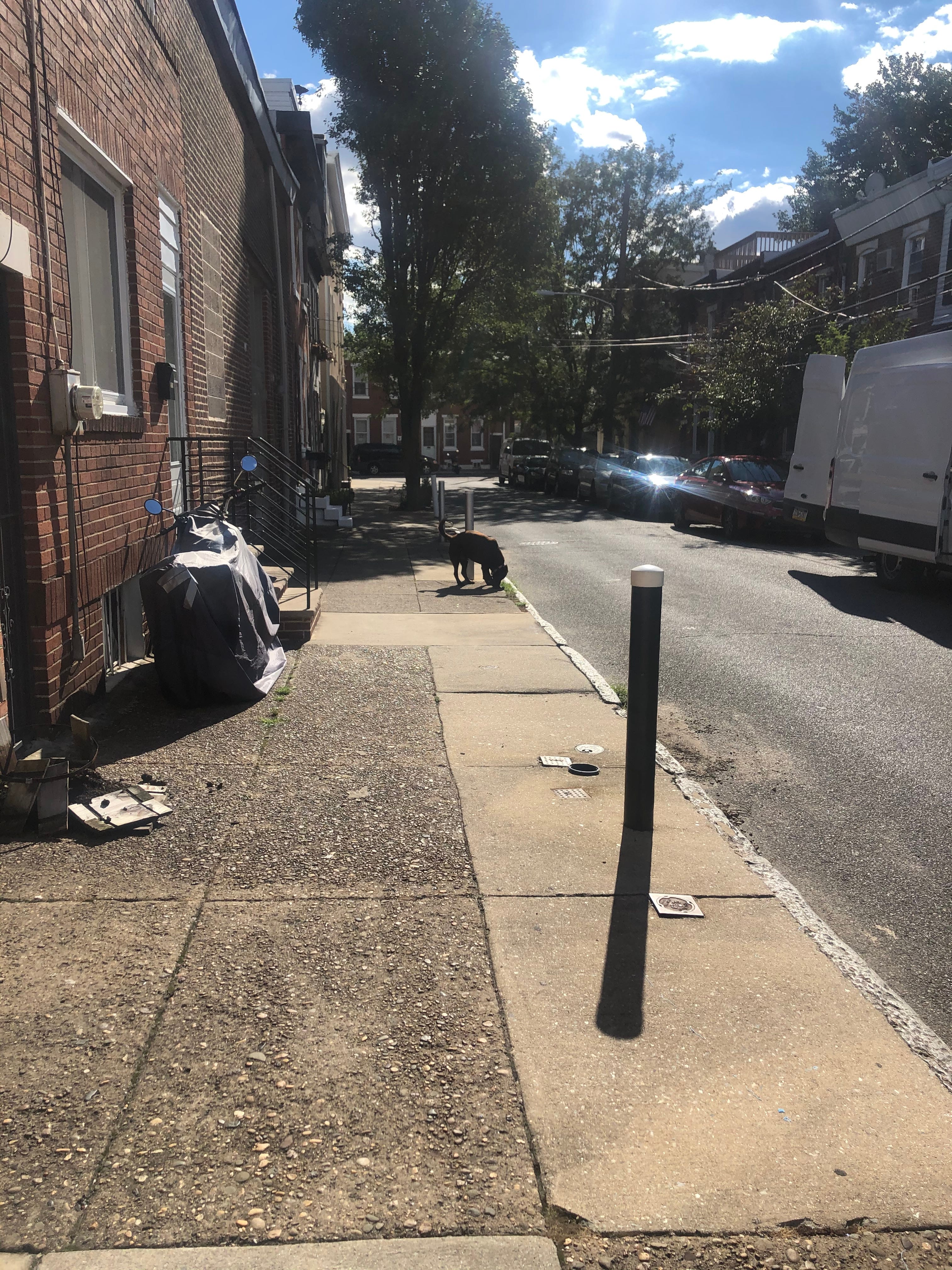
The workout got done — technically — but it wasn’t what it was supposed to be.
Next time I had that session, I headed to the greenway along the Delaware River.
Dead flat. No intersections. Tons of visibility. Room to run hard without thinking about anything else.
Same workout. Completely different result.
Conditions matter enough to solve for — not enough to cancel over.
There are real things that make speed work hard to execute well:
traffic lights cutting across your stride
too many turns on city curbs
a quarter-mile stretch where you’re constantly stopping and reversing
These are legitimate problems worth solving.
But solving them means finding the greenway, a straight road, or a place with low traffic — not defaulting to the easy run.
My athlete’s hilly campus had a flat stretch somewhere.
The traveling athlete has a park in an unfamiliar city if he spends two minutes looking.
The Tuesday speed session that got bumped to Wednesday still runs on Wednesday.
The obstacle is real. The question is whether you tried to solve it.
The Permission Moment
Two of my athletes right now — both carrying a little extra weight, both in the five-hour-per-week range — told me this week they think they need to build their mileage first before adding speed work.
The instinct makes sense: earn the hard stuff, start slow, don’t skip steps.
But here’s where they are:
12+ minute miles
Cadence around 150
Ten miles per week at most
At that volume, more easy miles doesn’t build a base. It cements an inefficient movement habit that will never feel good.
They’re not running slow because they’re unfit.
They’re running slow because they haven’t learned to turn their legs over.
And no amount of easy ten-mile weeks is going to fix that.
I See This In The Swim Too
It’s the same mistake as the beginner triathlete who thinks they need to swim 1.2 miles in 70.3 prep before they do short sets and speed work.
The short sets are exactly what teach you mechanics, pacing, and what good form feels like.
That’s what eventually lets you cover the distance with less effort.
Not grinding away slow and sloppy.
Volume doesn’t unlock mechanics. Mechanics unlock volume.
Beginners have the progression backwards.
